


Thru-Hull Transducers: Professional Sonar Performance and Maximum Precision
Achieving the highest level of sonar clarity requires a direct connection with the water. While interior mounts offer convenience, Thru-Hull transducers are the definitive choice for mariners who refuse to compromise on signal detail and depth range. By placing the sensor outside the hull, this setup eliminates the barriers between your electronics and the seabed, providing the professional-grade data needed for serious offshore navigation.
Main Benefits: Why Choose a Thru-Hull Transducer?
For many owners of high-end vessels and professional anglers, a Thru-Hull installation is the benchmark for reliability. It is the most common setup for yachts where maximum sonar sensitivity is a non-negotiable requirement.
- Unrivaled Signal Clarity: With no hull material to "shoot through," the sonar pulse travels directly into the water, capturing the finest details of fish targets and bottom structure.
- Extreme Depth Performance: By eliminating signal attenuation, Thru-Hull mounts allow your equipment to reach its maximum rated depth—essential for blue-water fishing.
- Instant Temperature Response: Since the sensor is in constant contact with the ocean, it provides real-time, highly accurate sea surface temperature (SST) readings.
- Versatile Compatibility: Unlike interior mounts, Thru-Hull sensors work with almost any hull material, including cored fiberglass, wood, and metal.
Compatibility: Selecting the Right Housing for Your Hull
Our team at Sail360 emphasizes that choosing the correct housing material is the most critical factor for a safe Thru-Hull installation. Mixing incompatible materials can lead to galvanic corrosion and structural failure.
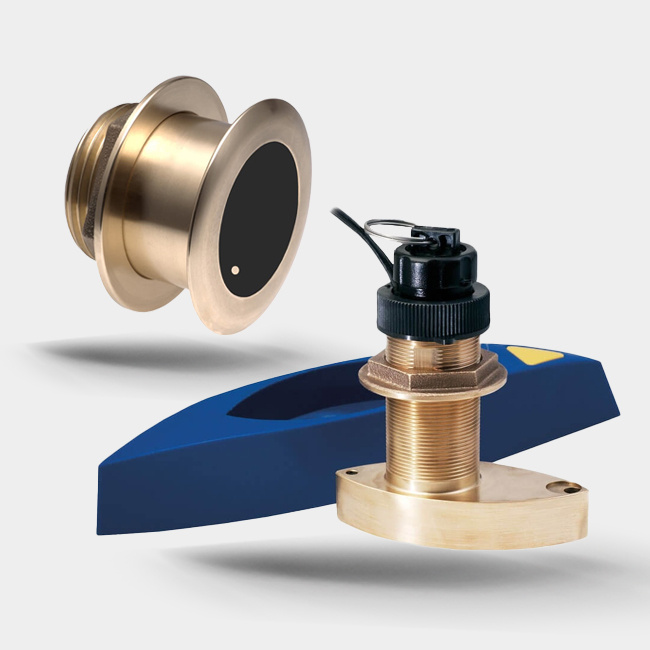
- Bronze Housings: The industry standard for solid fiberglass and wood hulls. Bronze is exceptionally durable but should never be used on aluminum hulls.
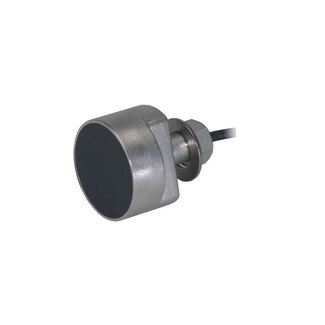
- Stainless Steel Housings: Specifically recommended for steel or aluminum vessels to prevent electrolysis and ensure long-term integrity.
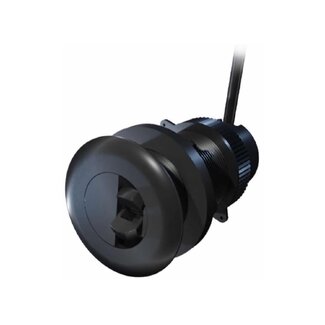
- Plastic/Nylon Housings: Suitable for fiberglass hulls; a cost-effective and reliable alternative that is completely immune to corrosion.
Adjusting for Deadrise: Tilted Elements vs. Fairing Blocks
To ensure your sonar beam points straight down on a sloped hull, we offer two sophisticated solutions:
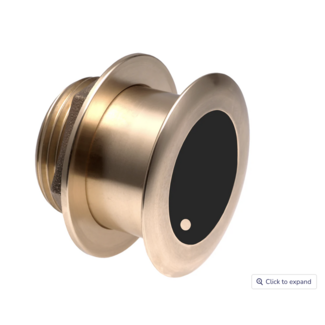
- Tilted Element Transducers: The ceramic element is fixed at a pre-set angle (typically 12° or 20°) inside a flush-mount housing, allowing for a low-profile finish without a fairing block.
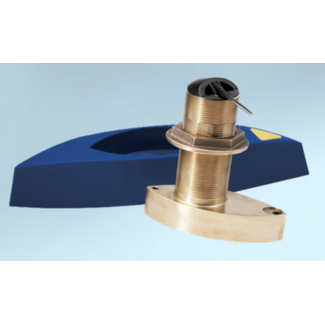
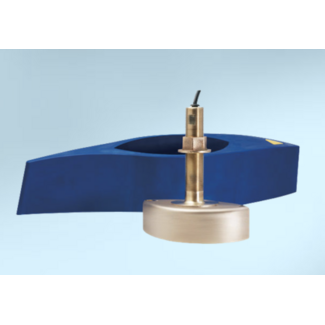
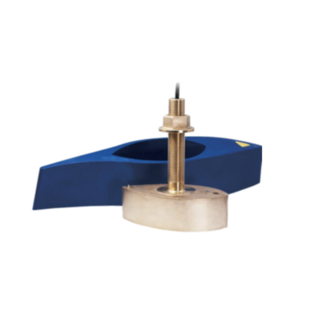
- High-Performance Fairing Blocks: For steep deadrise angles or high-speed stability, a fairing block orients the transducer perfectly horizontal while streamlining the water flow around the sensor.
Recommended Use: Professional Fishing and Luxury Cruising
We recommend Thru-Hull transducers for vessels where the priority is the quality of the data and the ability to track the bottom in challenging conditions.
- Sportfishing Yachts: When every detail counts, from identifying thermoclines to spotting individual baitfish in deep water, the direct contact of a Thru-Hull mount is irreplaceable.
- Blue-Water Cruisers: For long-range navigation, having the most reliable depth readings possible is a safety requirement. These transducers provide peace of mind by delivering clear data through various sea states.
Expert Advice: When to Consider Other Options
To ensure you make the right investment, our team suggests looking at In-Hull or Transom alternatives in the following scenarios:
- No-Hole Preference: If you are strictly against drilling through your hull for aesthetic or structural reasons, a high-power In-Hull transducer might be a better fit.
- Trailer Boats & Shallow Waters: If you frequently launch from a trailer or navigate in extremely shallow areas where groundings are a risk, a Transom Mount is easier to replace if damaged.
- Ultra-Lightweight Racing: For racing sailboats where every ounce of weight and drag is scrutinized, a flush-mount In-Hull setup might be preferred over a traditional external housing.
Frequently Asked Questions About Thru-Hull Sonar
- Do I need to haul out my boat for installation?
Yes. Thru-Hull installation requires the boat to be out of the water to safely drill the hull and allow the marine sealant to cure properly for a watertight fit. - How do I prevent my Thru-Hull transducer from fouling?
You can apply specialized water-based anti-fouling paint (like MDR or similar products) specifically designed for transducers. Never use metal-based bottom paint, as it will interfere with the sonar signal. - What is a "Flush Mount" Thru-Hull?
It is a low-profile housing that sits almost flat against the hull. It is ideal for trailer boats and fast cruisers because it minimizes drag and reduces the risk of damage during transport. - Can I use a Thru-Hull transducer with CHIRP and SideScan?
Absolutely. High-end Thru-Hull sensors are the best way to experience CHIRP, DownScan, and SideScan technology, as they provide the unobstructed "view" necessary for high-resolution imaging. - Which Furuno systems are compatible with these Thru-Hull mounts?
Our Thru-Hull range is perfectly suited for Furuno NavNet TZtouch3 and the FCV-588/628 series. At Sail360, we supply the correct Airmar Thru-Hull sensors with the specific 10-pin or 12-pin connectors required for a flawless Furuno integration.
A Trusted Partner for Your Onboard Technology
At Sail360, our focus goes beyond supplying marine equipment. Our goal is to help boat owners and professionals navigate with confidence by providing the knowledge, products, and support needed to make informed decisions before investing in onboard technology.
We believe that better navigation starts with understanding, which is why we make detailed, practical information available to support every stage of the buying process. Through Sail360, you’ll find:
- Carefully selected Thru-Hull transducers for every hull type, from luxury yachts to professional fishing vessels.
- Technical guidance on material compatibility and deadrise compensation to ensure a safe and accurate installation.
- Proven solutions from industry leaders, primarily focusing on the integration of Airmar sensors with Furuno navigation systems.
Whether you are upgrading your current setup or selecting a new high-performance mount, our team is available to help you evaluate options, understand pin compatibility, and choose with confidence.