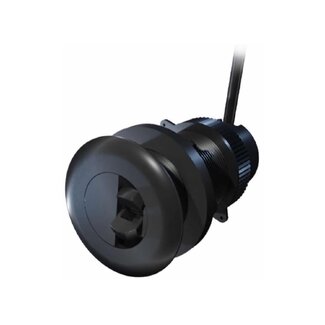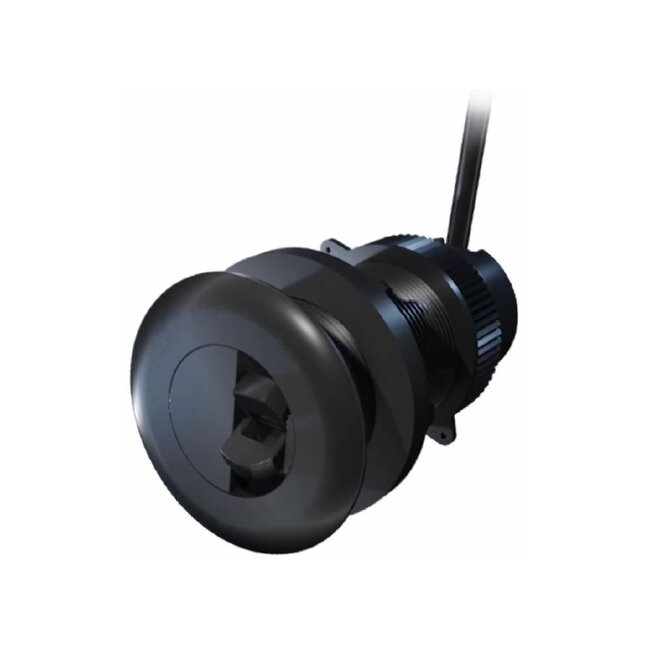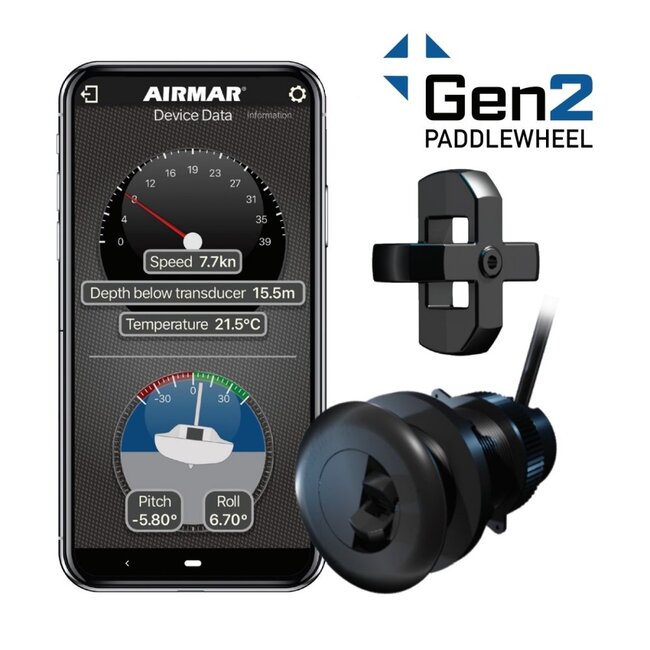
The DST810 Smart Multisensor sends speed, depth & temp via NMEA 2000 & Bluetooth. Integrated attitude sensor enables easy, wireless calibration via CAST app. NMEA2000 Read more.
The AIRMAR iDST810 is a through-hull smart multisensor designed to provide accurate and reliable depth, speed-through-water and water temperature data for onboard navigation and vessel performance monitoring. Installed directly in the hull, it acts as a central data source for marine instruments, delivering essential real-time information for safe navigation, efficient trim and overall hull performance.
The sensor outputs data via NMEA 2000 to compatible displays and instrument systems, while integrated Bluetooth connectivity enables wireless configuration, calibration and diagnostics through the Airmar CAST mobile app. All calibration settings and NMEA parameters are stored directly inside the sensor itself, ensuring consistent and repeatable data regardless of the connected display or onboard electronics.
With a fast 5 Hz update rate, the iDST810 delivers smooth and responsive measurements, while the built-in pitch and roll sensor supports heel-compensated speed calibration. This allows accurate speed-through-water readings across a wide range of operating conditions, making the iDST810 a versatile solution for both motor and sailing vessels that rely on precise hull and water data as part of their navigation setup.
Measures speed through water, depth and water temperature
5 Hz refresh rate for stable, responsive data output
Integrated pitch & roll sensor for heel-compensated speed calibration
Bluetooth connectivity for setup, calibration and diagnostics via the Airmar CAST app
NMEA 2000 output for integration with compatible marine instruments
Sensor-based calibration: settings are stored in the device, not in the display
Through-hull plastic housing P617V with integrated valve for safe servicing
The iDST810 is installed through the hull using the P617V plastic housing with an integrated valve, allowing the sensor to be removed for servicing while the vessel remains in the water. Proper installation in an area with clean water flow is essential to ensure accurate depth, speed and temperature measurements. Correct sealing and alignment during installation help maintain reliable data output and long-term performance.