

Marine Autopilots for Boats: Intelligent Course Control for Precision, Safety and Efficiency
A marine autopilot is the control unit within your boat’s steering system, responsible for maintaining a set course automatically.
By processing heading data and continuously correcting deviations, the autopilot makes real-time steering adjustments based on speed, vessel dynamics and sea conditions, reducing manual input and improving navigation performance.
The result is stable course keeping, reduced fatigue and better control, whether cruising, fishing or operating in demanding conditions.
How Autopilots Fit Within a Complete Steering System
Controlling your boat’s direction is achieved through a complete steering system made up of three key components working together:
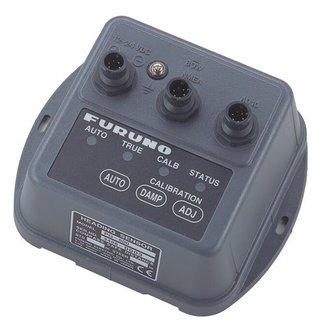
- Compass, provides accurate heading data and determines vessel direction
- Autopilot unit, processes that data and calculates course corrections
- Hydraulic steering system, executes those corrections by moving the rudder or engine
Each of these components works together as part of a single steering system, even though they are configured and selected individually.
The autopilot functions as the control unit, relying on accurate heading input from the compass and transmitting steering commands to the hydraulic steering system, which executes the movement.
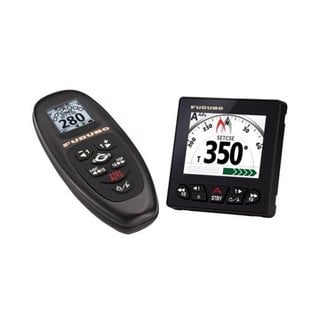
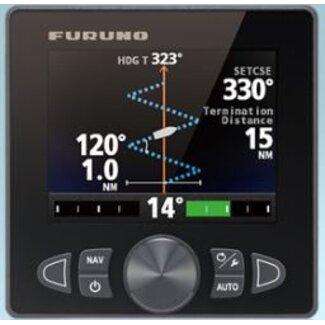
Overall system performance depends on how well these components are matched and calibrated, as heading accuracy, control logic and steering response must operate in coordination for stable and reliable course keeping. This is also where Furuno stands out, particularly through NavPilot systems that use adaptive self-learning control to refine steering behaviour as vessel speed, trim and sea conditions change.
Key Features of Modern Marine Autopilots
Modern autopilot systems combine control logic and sensor data to improve steering performance:
- Adaptive control algorithms, adjust steering behavior based on vessel dynamics and sea conditions
- Route tracking, when integrated with GPS and chartplotters
- Integration with onboard instruments, combining navigation data with real-time wind and speed inputs to enhance steering accuracy, using dedicated wind and speed measurement instruments
- Automatic tuning, optimizes steering response over time
- Multiple steering modes, adapted to different navigation scenarios
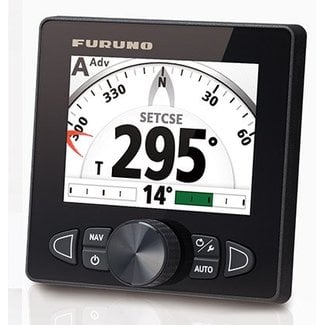
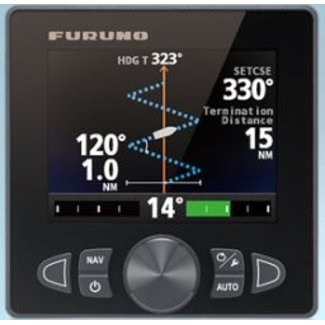
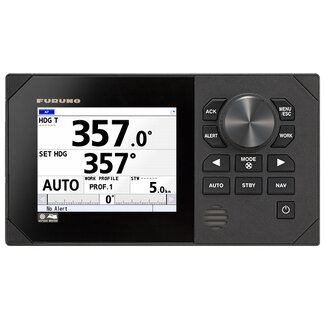
Systems such as Furuno NavPilot continuously adapt to speed and sea conditions, improving steering accuracy and efficiency.
Furuno goes a step further, offering advanced features that enhance precision, efficiency and ease of use:
- Self-learning system → automatically adapts to your vessel to optimize steering performance and reduce unnecessary corrections
- Advanced steering modes → including FishHunter™, Economy and Precision modes for fishing, fuel efficiency or maximum course accuracy
- High-accuracy course keeping → maintains a stable heading with minimal deviation, even in changing sea conditions
- Smooth and efficient steering → minimizes rudder movement to improve onboard comfort and reduce fuel consumption
- Fantum Feedback™ system → eliminates the need for a physical rudder feedback unit while maintaining precise control
Features such as adaptive self-learning control and Fantum Feedback™ are a big part of why Furuno NavPilot is so often shortlisted for higher-spec autopilot installations.
If you are comparing options, you can explore our guide on which Furuno autopilot suits your boat, including insights on how to choose the right hydraulic pump or linear drive for your setup.
How the Autopilot Connects to Your Steering System
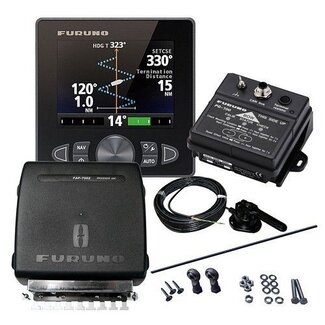
The autopilot sends commands to a drive unit that interfaces with your existing steering system.
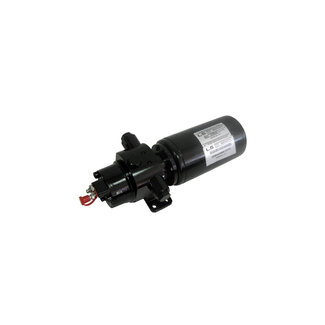
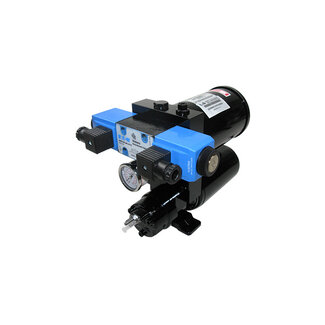
- Hydraulic pump units, used in motorboats, regulate fluid pressure within the steering circuit to move the rudder or engine
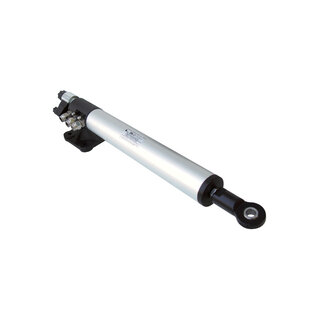
- Linear drive units, used in sailboats, apply controlled linear force directly to the rudder mechanism
Hydraulic pump units operate with reversible flow and adjustable output, allowing control over steering speed and response depending on cylinder volume and vessel size.
Linear drive units convert rotational motion into linear thrust, delivering precise and efficient rudder movement, particularly suited for below-deck installations and sailing applications.
Correct integration between autopilot, drive unit and steering system ensures consistent and predictable steering behavior. This is particularly relevant with Furuno autopilot setups, where control quality depends not only on the processor itself, but on how accurately the drive unit and steering system are matched to the boat.
How to Choose the Right Autopilot for Your Boat
Selecting the right autopilot depends on how your vessel is configured and how it is used.
1. What steering system does your boat need?
The autopilot must be compatible with your steering setup:
- Hydraulic pumps, commonly used in motorboats to control steering pressure
- Linear drive units, ideal for sailboats, offering high thrust with low power consumption and flexible installation below deck
Hydraulic pump units operate with reversible flow and adjustable output, allowing control over steering speed and response depending on cylinder volume and vessel size.
Linear drive units convert rotational motion into linear thrust applied directly to the rudder, delivering precise movement with controlled force.
The drive unit determines how effectively the autopilot can apply steering corrections.
2. What level of control and integration do you need?
Autopilot systems vary in functionality and integration:
- Basic systems, maintain a fixed heading and reduce manual steering effort
- Advanced systems, integrate with GPS, chartplotters and onboard sensors to enable route tracking and adaptive steering
Systems such as the Furuno NavPilot take this further by using self-learning control algorithms that continuously refine steering behavior based on real-time vessel response. Furuno is particularly well known for autopilot systems that do more than maintain heading, helping the vessel steer more intelligently as conditions and operating modes change.
3. What size and usage profile does your boat have?
Autopilot performance depends on vessel characteristics and operating conditions:
- Larger or heavier vessels require higher output drive units and faster correction response
- Offshore navigation requires stable control under changing conditions
- Smaller vessels can operate with more compact systems
Your usage profile also plays a key role:
- Cruising, focuses on comfort and reduced workload
- Fishing, requires stable and precise course control
- Professional use, demands reliability and continuous operation
Important Considerations Before Installation
To ensure optimal performance, correct setup and configuration are essential:
- System calibration, required for accurate steering response and course keeping
- Power requirements, must match the vessel’s electrical system and usage patterns
- System familiarization, understanding settings and operating modes is essential before use
- Component compatibility, autopilot, drive unit and sensors must be correctly matched
Many autopilot systems can be installed by the user, and this is common in practice. However, it is important to carefully follow installation instructions and setup procedures. Professional installation can be recommended for more complex systems or configurations.
Frequently Asked Questions About Marine Autopilots
How does a marine autopilot work?
A marine autopilot continuously compares your vessel’s heading, provided by a compass or satellite compass, with the desired course. It makes small steering corrections via the drive unit in real time to keep the vessel on track.
Can a marine autopilot follow a GPS route automatically?
Yes, advanced autopilot systems can follow predefined GPS routes when connected to a chartplotter or navigation system. They track waypoints and automatically adjust steering to maintain the planned course.
Is a marine autopilot suitable for small boats and larger vessels?
Yes, autopilot systems are available for a wide range of vessels, from small boats to larger yachts and professional applications. Smaller boats benefit from compact systems that reduce steering effort, while larger vessels require more powerful drive units for stable and responsive control.
Can I install a marine autopilot system myself?
Yes, many marine autopilot systems are designed for user installation and are commonly installed by boat owners. Following the installation guidelines and ensuring correct system calibration and configuration is essential for reliable performance.
Can a marine autopilot be connected to an existing steering system and onboard electronics?
In most cases, yes. Marine autopilots can be integrated with existing hydraulic or mechanical steering systems when the correct drive unit or pump is selected. They can also connect to onboard electronics via NMEA 2000 or NMEA 0183, allowing integration with GPS, chartplotters and navigation instruments.
A Trusted Partner for Your Onboard Technology
At Sail360, our focus goes beyond supplying marine equipment. Our goal is to help boat owners and professionals navigate with confidence by providing the knowledge, products and support needed to make informed decisions before investing in onboard technology.
We believe that better navigation starts with understanding, which is why we make detailed, practical information available to support every stage of the buying process. Through Sail360, you’ll find:
- Carefully selected marine autopilot systems designed for reliable and precise course control
- Technical guidance on system compatibility, steering integration and onboard configuration
- High-performance Furuno NavPilot systems, known for their precision, reliability and advanced steering capabilities
Whether you are upgrading your current setup or selecting a new autopilot system, our team is available to help you evaluate options, understand technical requirements and choose with confidence.