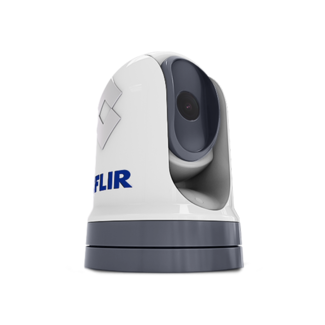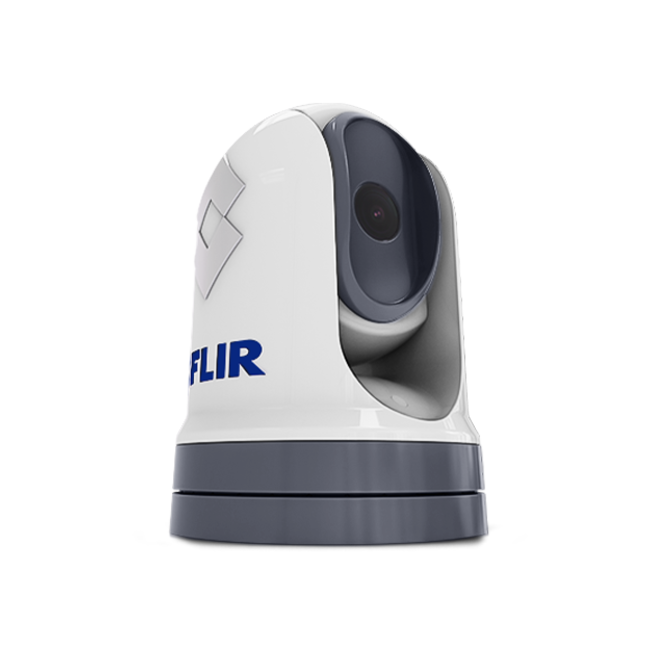

FLIR M332 is a professional thermal camera combining 2-axis gyro stabilization, FLIR Boson thermal imaging, 9 Hz or 30 Hz performance and seamless Furuno integration for confident night navigation and superior thermal awareness. Read more.
The FLIR M332 Thermal Camera System is built for boat owners who want a stronger thermal view from the helm with stabilized control, professional marine integration and compatibility with suitable Furuno chartplotter and MFD systems. It is available in 9 Hz and 30 Hz versions: choose the 9 Hz version for recreational and light commercial setups where stabilized thermal awareness is the priority, and choose the 30 Hz version when smoother video response is preferred for more demanding operational use. It combines a standard-resolution FLIR thermal sensor, 2-axis gyro stabilization, full pan-and-tilt movement and advanced image processing to help detect vessels, buoys, obstacles and heat signatures in darkness, glare and low-visibility conditions.
Powered by the FLIR Boson thermal imaging core, the M332 sits above compact entry-level thermal cameras such as the M232. It gives the user a more stable image, broader video output options and a more advanced platform for coastal cruising, night navigation, commercial use and demanding recreational setups.
Within the FLIR range, the M332 is the focused choice for stabilized thermal awareness, rugged all-weather performance and serious helm integration, including compatible Furuno multifunction display environments, without moving into higher-resolution or dual-sensor FLIR systems.
The M332 adds a stable thermal layer to the navigation setup. Radar gives range and movement. AIS adds vessel data when targets transmit. The M332 gives the operator thermal visual awareness, helping identify heat signatures and non-water objects when normal visibility becomes limited.
For compatible Furuno helm setups, the M332 can bring FLIR stabilized thermal video into the existing chartplotter or MFD environment, helping keep camera viewing and control closer to the main navigation workflow.
For a closer look at the FLIR M300 Series and how these cameras support onboard visibility, you can watch Teledyne FLIR’s M300 Series overview here:
The M332 is especially useful for:
Night navigation in coastal routes, harbours and anchorages
Detecting vessels, buoys and floating obstacles in darkness or light fog
Keeping a steadier thermal image in rougher sea conditions
Improving helm awareness with 360° pan and ±90° tilt
Integrating thermal video into compatible Furuno chartplotter, MFD or marine video systems
The major step up from smaller thermal cameras is stabilization. The M332 uses 2-axis gyro stabilization to help reduce the effect of vessel motion on the image. Vertical stabilization compensates for pitch, while horizontal stabilization helps keep the camera’s field of view on the selected bearing.
That makes the thermal image easier to use when the boat is moving, the sea state increases or the operator is tracking a target from distance. For buyers who want thermal vision that feels more controlled at the helm, this is one of the strongest reasons to choose the M332.
With 360° continuous pan and ±90° tilt, the camera can scan around the vessel instead of being limited to a fixed viewing angle.
The M332 uses a 320 × 256 VOx microbolometer and FLIR image processing to detect differences in heat. This allows the camera to reveal boats, buoys, structures and human-sized targets in complete darkness, glare and light fog.
Its 24° × 18° field of view gives a practical balance for scanning ahead and around the vessel, while 4× continuous digital zoom helps inspect detected targets more closely.
For boat owners who want thermal detection with a stronger, stabilized M-Series platform, the M332 delivers a confident step above compact thermal systems.
The M332 offers broad marine video integration, with analog NTSC / PAL video, HD-SDI lossless video and two independent IP video streams using H.264 / MJPEG. It is also ONVIF Profile S conformant, making it suitable for compatible marine video and security-style systems.
FLIR M-Series cameras are designed to integrate with compatible chartplotters and multifunction displays from brands including Furuno, Garmin, Raymarine and Simrad. For Furuno users, the key check is the selected NavNet or compatible MFD environment, including display model, software version, control support and network setup before purchase.
The M332 also supports Marine Video Analytics, which can help identify non-water objects in the thermal scene when used within a compatible setup.
Camera Type: Marine thermal camera with pan and tilt
Thermal Core: FLIR Boson
Detector Type: 320 × 256 VOx microbolometer
Video Refresh Rate: 9 Hz or 30 Hz, depending on selected version
Field of View: 24° × 18°
Focal Length: 9.1 mm
Focus: Fixed, 12 ft / 3 m to infinity
Digital Zoom: 4× continuous
Pan / Tilt: 360° continuous pan, ±90° tilt
Gyro Stabilization: Yes, 2-axis
Marine Video Analytics: Yes
Video Output: Analog NTSC / PAL, HD-SDI and dual IP video streams
Network Video: Two independent H.264 / MJPEG streams
Furuno Integration: Compatible Furuno chartplotter or multifunction display integration, depending on display model, software and network setup
ONVIF: Profile S conformant
Power Requirements: 12-24 V DC
Power Consumption: 41 W nominal, 56 W with heaters
Protection Rating: IPX6
Operating Temperature: -25°C to +55°C
Weight: 6.3 kg camera only, 6.8 kg with top-down riser
Detection Performance
30 ft vessel: 1.60 nm / 2.96 km
Human-sized target: 0.20 nm / 362 m
NATO target 2.3 × 2.3 m: 0.47 nm / 879 m
Actual detection range can vary depending on camera setup, environmental conditions and operator experience, but these figures position the M332 as a strong stabilized thermal system for short-to-medium range awareness and night navigation.
Choose the FLIR M332 Thermal Camera System if you want stabilized thermal imaging, professional video integration and stronger onboard awareness than a compact entry-level thermal camera. It is a strong fit for owners who want a more capable thermal system for night navigation, rougher conditions and serious helm setups.
For boats already using compatible Furuno chartplotters or multifunction displays, the M332 is a practical way to add stabilized FLIR thermal imaging to the existing navigation display environment without moving to a dual-sensor camera.
Move to another FLIR model when the onboard requirement changes:
Choose the FLIR M232 Thermal Camera System for a smaller, more affordable pan-and-tilt thermal camera.
Choose the FLIR M300C Visible Camera System if your priority is HD visible imaging, colour detail and 30× optical zoom.
Choose the FLIR M364 Thermal Camera System for higher-resolution thermal imaging and stronger detection performance.
Choose the FLIR M364C Thermal Camera System when you want thermal imaging and visible HD zoom in one integrated system.
The M332 makes most sense when the buyer wants thermal detection, stabilized viewing and advanced integration in a clean thermal-only M-Series platform. It delivers a stronger onboard awareness layer without paying for visible-camera capability that may not be required for the setup.
1. What is the main advantage of the M332 over the M232?
The M332 adds 2-axis gyro stabilization, a stronger M-Series platform and broader video integration. It is the better choice when image stability, display flexibility and rougher-condition use matter more than compact size.
2. Can the M332 connect to Furuno and other marine display brands?
Yes, FLIR M-Series cameras are designed for integration with compatible chartplotters and MFDs from brands including Furuno, Garmin, Raymarine and Simrad. For Furuno setups, check the display model, software version, network configuration and camera control support before purchase.
3. Should I choose the 9 Hz or 30 Hz version of the M332?
Choose the 9 Hz version for recreational and light commercial setups where stabilized thermal awareness, reliable detection and display integration are the main priorities. Choose the 30 Hz version when smoother video response is preferred for more demanding operational use.
4. Where should the M332 be mounted?
Mount it where the camera has a clear view around the vessel, away from major obstructions such as antennas, rails or hardtop structures. A stable mounting position helps the gyro-stabilized image perform at its best.
At Sail360, we select marine electronics for long-term value, technical reliability and real onboard usefulness, helping buyers choose equipment that fits their vessel, display system and navigation style.