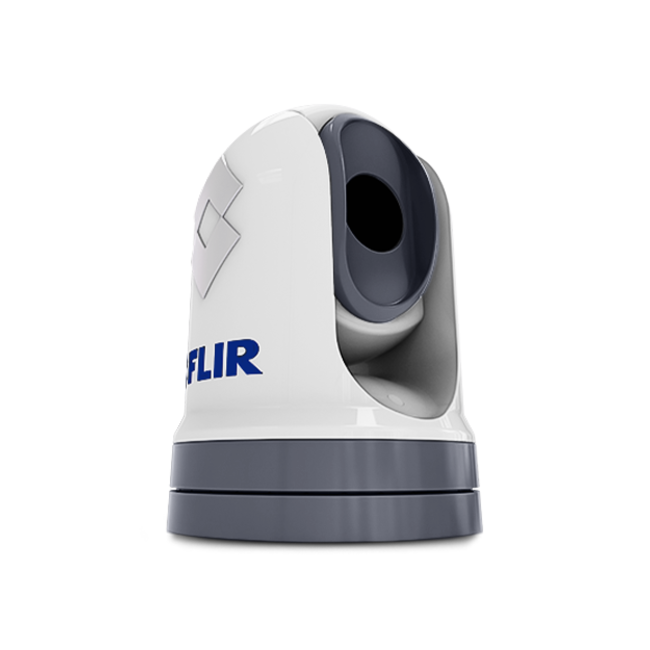

FLIR M300C is a professional HD marine camera combining 30× optical zoom, 2-axis gyro stabilization, 1080p ultra-low-light imaging and seamless Furuno integration for confident long-range target identification and superior helm awareness onboard. Read more.
The FLIR M300C Visible Camera System is built for boat owners who want sharper visual control from the helm, with chartplotter integration for compatible Furuno multifunction display systems. It combines an ultra-low-light HD visible camera, 30× optical zoom and 2-axis gyro stabilization to help identify vessels, buoys, navigation marks and distant targets with more confidence.
The M300C is focused on positive visual identification. It helps the operator recognise the target with visible detail, colour, shape and movement. With 1920 × 1080 HD video, 30× optical zoom, 12× digital zoom and full pan-and-tilt movement, it gives the helm a controlled, stable and detailed view during daytime, dusk and low-light operation.
Within the FLIR range, the M300C is the focused choice for professional visible imaging, long-range zoom and stabilized target monitoring without moving into a dual thermal / visible camera system. For boats already using a compatible Furuno chartplotter or MFD, it adds a professional FLIR visible-camera layer to the existing helm display environment.
The M300C adds a powerful visible layer to the navigation setup. Radar gives range and movement. AIS adds vessel data when targets transmit. The M300C gives the operator high-definition visual confirmation, helping connect instrument data with what is actually in front of the boat.
For Furuno helm setups, the M300C is especially relevant because FLIR M-Series cameras are designed to integrate with compatible Furuno chartplotters and multifunction displays. This allows the visible camera image to be viewed through the helm display environment, with pan, tilt and zoom control available when the selected display and network setup support it.
For a closer look at the M300 range and how these cameras support onboard visibility, you can watch Teledyne FLIR’s M300 Series overview here:
The M300C is especially useful for:
Identifying vessels, buoys and navigation marks from the helm
Monitoring approaches, anchorages and harbour entrances with a stable image
Inspecting distant targets using 30× optical zoom
Improving visibility in dusk, evening and low-light conditions
Adding professional video capability to compatible Furuno chartplotter and MFD systems
Supporting pan, tilt and zoom control through compatible marine display environments
The M300C is strongest when the target is far away and image control matters. Its 30× optical zoom lets the operator inspect distant objects with high detail, while 2-axis gyro stabilization helps keep the image steadier when the boat is moving.
That combination makes a real difference at sea. Zoom without stabilization can quickly become difficult to use. The M300C gives a more controlled view for tracking vessels, checking navigation marks, scanning harbour entrances or monitoring activity around the boat.
With 360° continuous pan and ±90° tilt, the camera can scan around the vessel instead of being locked to one fixed angle.
The M300C uses a 1/2.8” CMOS ultra-low-light sensor with up to 1920 × 1080 resolution at 30 fps. It is designed to deliver clear visible imaging in daylight, dusk, evening operation and low ambient light.
Its visible imaging profile is ideal when the buyer wants detail, colour, shape and target recognition. For coastal cruising, marina approaches, onboard security and long-range inspection, the M300C gives the helm a precise and professional visual feed.
The M300C offers strong integration flexibility, with analog NTSC / PAL video, HD-SDI lossless video and dual IP video streams using H.264 / MJPEG. It is also ONVIF Profile S conformant, which makes it useful for compatible marine video and security-style systems.
For compatible Furuno chartplotters and multifunction displays, the M300C can bring FLIR visible-camera viewing into the main helm display environment. This is valuable for owners who want long-range zoom, stabilized visual monitoring and camera control without adding a separate standalone screen.
When connected to a compatible chartplotter or multifunction display, the camera can be controlled from the helm for pan, tilt and zoom operation. Compatibility should be checked against the selected Furuno display model, software version and onboard network setup, because these elements determine how video display and camera control are supported.
Camera Type: Ultra-low-light visible marine camera
Sensor: 1/2.8” CMOS
Resolution: Up to 1920 × 1080 at 30 fps
Minimum Illumination: 0.006 lux with low-light setting on / 0.1 lux with low-light setting off
Optical Zoom: 30×
Digital Zoom: 12×
Focal Length: 4.3 mm to 129 mm
Field of View: 63.7° × 35.8° wide to 2.3° × 1.29° narrow
Pan / Tilt: 360° continuous pan, ±90° tilt
Gyro Stabilization: Yes, 2-axis
Marine Video Analytics: Yes
Video Output: Analog NTSC / PAL, HD-SDI and dual IP video streams
Network Video: Two independent H.264 / MJPEG streams
Furuno Integration: Compatible Furuno chartplotter or multifunction display integration, depending on display model, software and network setup
ONVIF: Profile S conformant
Power Requirements: 12-24 V DC
Power Consumption: 41 W nominal, 56 W with heater
Protection Rating: IPX6
Operating Temperature: -25°C to +55°C
Weight: 6.3 kg camera only, 6.8 kg with top-down riser
Choose the FLIR M300C Visible Camera System if you want stabilized HD video, long-range optical zoom and clear visual identification. It is a strong fit for owners who want a professional marine camera for daylight, dusk and low-light viewing, with much more precision than a standard onboard camera.
For boats with compatible Furuno chartplotters or multifunction displays, the M300C is a practical choice when the buyer wants to add FLIR stabilized visible imaging to the existing navigation display environment. It suits owners who need long-range zoom and positive target identification at the helm, rather than heat detection from a thermal-only camera.
Move to another FLIR model when the onboard requirement changes:
Choose the FLIR M232 Thermal Camera System for compact and more affordable thermal awareness.
Choose the FLIR M332 Thermal Camera System when heat detection is the main priority.
Choose the FLIR M364 Thermal Camera System for stabilized thermal imaging and stronger offshore awareness.
Choose the FLIR M364C Thermal Camera System when you want thermal imaging and visible HD zoom in one integrated system.
The M300C makes most sense when the buyer wants visible detail, stabilized zoom and professional target recognition. It delivers the image control of the FLIR M-Series in a cleaner visible-camera configuration, ideal for users who do not need a thermal sensor in this setup.
1. Can I use the FLIR M300C with a Furuno chartplotter?
Yes, the M300C is part of the FLIR M-Series camera range designed for integration with compatible Furuno chartplotters and multifunction displays. The exact functions available depend on the Furuno display model, software version and onboard network setup.
2. What does Furuno compatibility add to the FLIR M300C?
With a compatible Furuno chartplotter or MFD, the M300C can add FLIR visible-camera viewing to the helm display environment and support pan, tilt and zoom control when the system supports it. This helps keep long-range visual monitoring closer to the main navigation workflow.
3. What should I check before connecting the M300C to my display?
Check the available video inputs, camera control support and network setup. The M300C offers analog, HD-SDI and IP video, but full control from the helm depends on the compatible display, software version and onboard integration.
4. Will the zoom still be usable while the boat is moving?
Yes, the 2-axis gyro stabilization helps keep the image steadier when using high zoom at sea. Mounting position, vibration and sea state still affect the final image, so a clean, stable installation point is important.
5. Where should the M300C be mounted?
Mount it high enough to give the camera a clear view around the vessel, away from major obstructions such as rails, antennas or hardtop structures. A good mounting position improves pan-and-tilt visibility and makes long-range zoom more useful.
6. Can the M300C be used for both navigation and onboard monitoring?
Yes. Its pan-and-tilt movement, low-light HD sensor, IP video streams, HD-SDI output and ONVIF Profile S support make it useful for navigation awareness, marina monitoring and compatible onboard video systems.
At Sail360, we select marine electronics for long-term value, technical reliability and real onboard usefulness, helping buyers choose equipment that fits their vessel, display system and navigation style.