

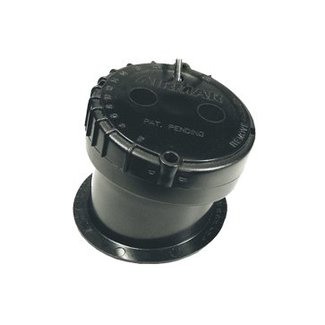
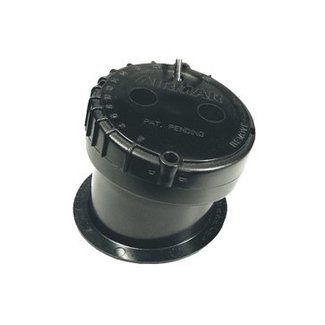
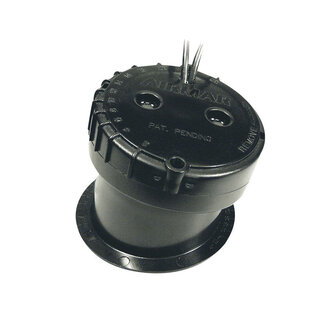
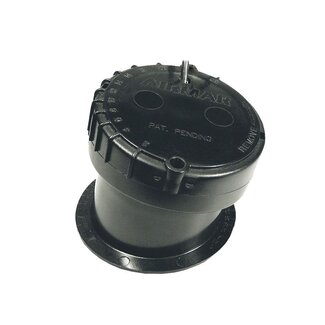
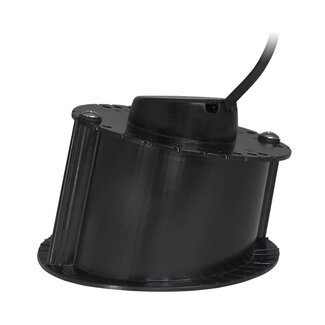
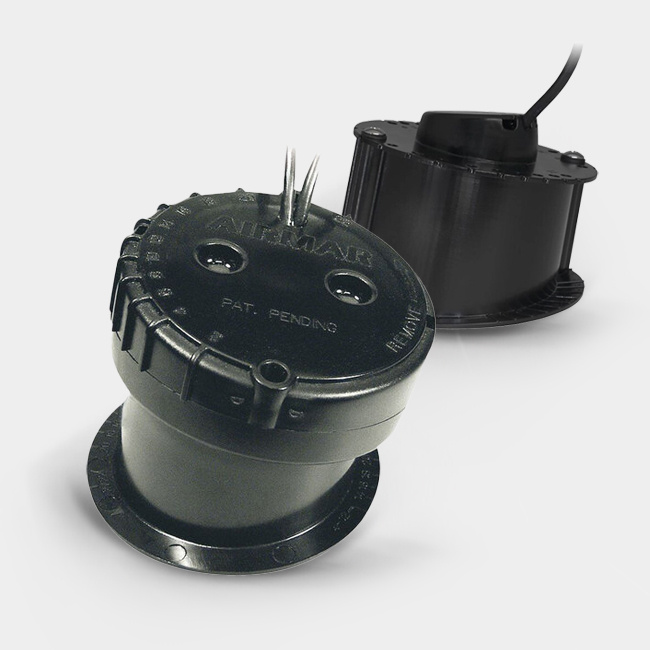
In-Hull Transducers: Seamless Interior Mounting for Solid Fiberglass Hulls
Finding the right balance between sonar performance and hull preservation is essential for any high-end vessel. While traditional mounts require external fittings, in-hull transducers offer a discreet alternative by transmitting signals directly through the boat's bottom. This setup is particularly effective for owners looking to avoid drag and maintenance while maintaining a clean, undisturbed hull profile.
Main Benefits: Why Choose an In-Hull Transducer?
For many owners of high-performance vessels, the choice of an in-hull transducer is a decision based on vessel integrity and operational simplicity. By mounting the unit entirely within the bilge, you achieve a sophisticated sonar setup without traditional hull modifications.
- Zero Hull Penetration: Maintain the original structural integrity of your boat with a no-drill installation.
- Maintenance-Free Ownership: Since the hardware never touches the water, it is completely protected from bio-fouling, barnacles, and corrosion.
- Hydrodynamic Purity: Keeps your hull’s profile sleek, eliminating drag and the risk of damage from trailers or debris.
- Reliable High-Speed Readings: Protected from exterior turbulence, providing cleaner signal returns at cruising speeds.
Compatibility: Is Your Hull Suitable for an In-Hull Setup?
Our team at Sail360 emphasizes that material compatibility is the most critical factor for success. In-hull transducers rely on "shooting through" the hull, which requires a specific medium to maintain signal transparency.
- Solid Fiberglass Only: This technology is engineered exclusively for solid, non-cored GRP (fiberglass).
- The Sandwich Barrier: If your hull uses a core material (foam, balsa, or honeycomb), the air pockets will trap the sonar signal, making the transducer ineffective.
- Material Density: Metal, wood, and carbon fiber hulls are incompatible as they absorb or reflect the ultrasonic pulses.
Adjusting for Deadrise Angles and Signal Accuracy
To ensure an accurate vertical reading, the transducer must account for the deadrise angle—the slope of your hull’s V-shape.
- Precision Leveling: High-end in-hull models use an adjustable base or "tank" that compensates for angles up to 22°.
- Vertical Alignment: This ensures the beam points directly at the seabed, preventing skewed data and ensuring your depth readings are 100% reliable.
Recommended Use: Performance Motorboats and Sailboats
We recommend in-hull transducers for specific profiles where hull integrity and convenience are the priority. It is less about "raw power" and more about the smartest integration for your boat's design.
- High-Speed Motor Yachts: For fast-moving hulls, the main challenge is air turbulence (cavitation) at the transom. An in-hull setup allows the sensor to sit in clean, undisturbed water, ensuring consistent depth readings even at high knots.
- Performance Sailboats: If you prioritize a smooth, drag-free hull, this is the definitive choice. By keeping the sensor inside, you eliminate underwater hardware that can snag on seaweed or debris—the perfect "set and forget" solution.
Expert Advice: When to Consider Other Options
To ensure you make the right investment, our team suggests looking at Thru-Hull or Transom alternatives in the following scenarios:
- Professional Sportfishing: If your priority is finding fish at extreme depths with maximum detail, the slight signal loss through the fiberglass might be a factor. A Thru-Hull mount is technically superior for this specific need.
- Cored or Sandwich Hulls: As mentioned, this technology only works through solid fiberglass. If your boat has a foam or balsa core, the signal will not pass.
- Temperature Tracking: Since the sensor stays dry inside the bilge, it cannot provide an instant reading of the water temperature—a vital data point for certain types of fishing.
Frequently Asked Questions About In-Hull Sonar
- What is the best liquid to use inside an in-hull transducer mounting tank? For optimum signal transmission, the tank should be filled with non-toxic propylene glycol (RV antifreeze) or mineral oil. These liquids ensure the ultrasonic pulse travels from the sensor through the hull without air interference.
- Will an in-hull transducer work accurately on a boat with a trailer? Yes. Unlike transom mounts, which are vulnerable during launching and loading, an in-hull sensor is safely protected inside the bilge. It is the most durable choice for vessels that are frequently trailered.
- Does the thickness of my fiberglass hull affect the sonar performance? Yes. While it works on most solid hulls, a hull thicker than 1 inch (25mm) will cause signal loss. As a specialized supplier, Sail360 can provide high-power 1kW models to compensate for heavy-duty hull constructions.
- Can I use an in-hull transducer with CHIRP sonar technology? Absolutely. You can pair a CHIRP-ready in-hull transducer with your navigation displays to achieve excellent target separation and deep-water performance without the need for a thru-hull fitting.
- What navigation systems and fishfinder displays are compatible with In Hull transducers? The transducers in our catalog are designed for broad compatibility, and most models are suited for Furuno electronics. At Sail360, we recommend pairing these sensors with Furuno NavNet TZtouch3 systems or FCV-588/628 fishfinders. We supply the necessary 10-pin or 12-pin Furuno adapters to ensure a stable and reliable connection with your existing display.
A Trusted Partner for Your Onboard Technology
At Sail360, our focus goes beyond supplying marine equipment. Our goal is to help boat owners and professionals navigate with confidence by providing the knowledge, products, and support needed to make informed decisions before investing in onboard technology.
We believe that better navigation starts with understanding, which is why we make detailed, practical information available to support every stage of the buying process. Through Sail360, you’ll find:
- Carefully selected in-hull transducers for solid fiberglass vessels where hull integrity is a priority.
- Technical guidance on deadrise compensation and signal clarity to ensure your sonar performs as expected.
- Proven solutions from industry leaders, primarily focusing on the integration of Airmar sensors with Furuno navigation systems.
Whether you are upgrading your current setup or selecting a new interior mount for a high-performance hull, our team is available to help you evaluate options, understand pin compatibility, and choose with confidence.