

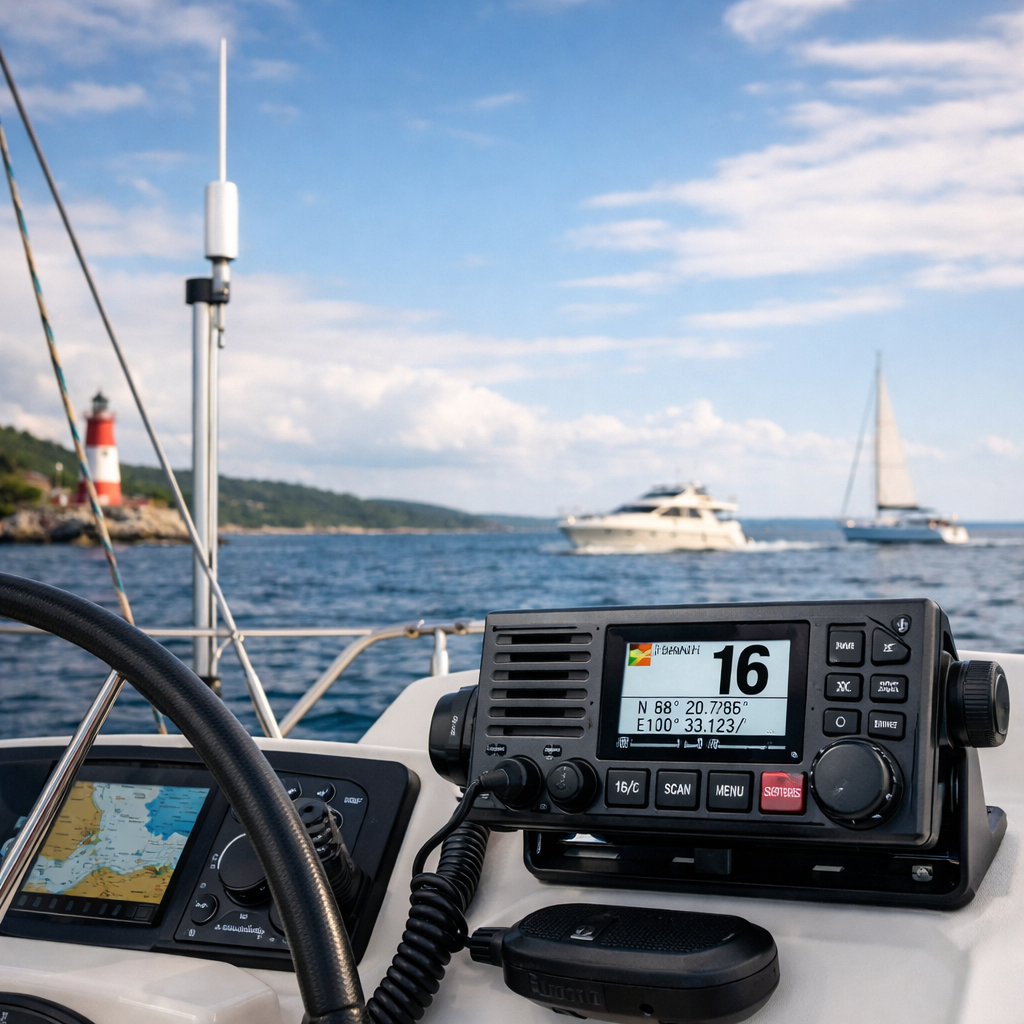
Why a VHF Radio Is Essential on Board and How the Right Antenna Boosts Your Range
Whether you are a seasoned cruiser, a coastal fisherman, or a weekend sailor, you know that communication on the water is key, especially in critical situations. That’s why having a high quality marine VHF radio and the right antenna on board is so important.
A good communication setup allows you to stay connected with nearby vessels, harbor authorities, and emergency services when it matters most. But with so many radios and antennas available, many boat owners ask the same question: why are they so important and how do you choose the right one?
In this article we explain why a marine VHF radio is essential and explore the different types of antennas available so you can choose the right setup for your boat and your communication needs.
If you are looking for reliable communication equipment, you can explore our full range of marine communication systems and VHF radios.
Why Your Boat Needs a VHF Radio
A VHF (Very High Frequency) radio is more than just a communication tool. It serves as your safety line, weather channel, and direct connection to harbor masters and nearby vessels. Unlike mobile phones, marine VHF radios are designed specifically for boating environments and remain reliable even when you are far from shore.
With a VHF radio you can communicate directly with coast guards, locks, harbors, and nearby boats. In emergency situations you can send distress calls through Channel 16 or the DSC distress button, allowing rescue services to respond quickly. VHF radios also provide weather updates directly from marine weather stations and allow clear communication even when mobile networks are unavailable.
On many waterways a VHF radio is required by law, particularly for vessels longer than seven meters or boats equipped with radar.
Top Choices
The Furuno FM-4850 is one of the top choices for modern marine communication systems. It is a compact black box radio that combines five devices into one system. Besides functioning as a VHF radio it also includes an AIS receiver, GPS receiver, megaphone and foghorn, and an intercom system.
With support for up to three handset connections, NMEA2000 compatibility, and plug and play integration with Furuno TZtouch multifunction displays, it is an excellent solution for modern boats.
[products=blog_fm4850]
Another excellent option is the Tron TR30 GMDSS handheld radio. This dual mode radio supports both everyday marine communication and emergency GMDSS use. With emergency batteries, rechargeable batteries, strong audio performance, and waterproof accessories, it is a reliable choice for both commercial vessels and recreational boats.
[products=blog_TR30]
Why the Antenna Matters More Than You Think
Even the best radio cannot perform properly without the right antenna. Your antenna determines your communication range, signal clarity, and reliability. In many cases the antenna is the most important part of your communication setup, yet it is often overlooked.
Choosing the correct antenna for your vessel can significantly improve the performance of your VHF radio system.
VHF Antennas (Very High Frequency) Standard for Marine Communication
VHF antennas are the most common choice for boaters. They support short to medium range communication such as contacting harbor masters, bridges, locks, and nearby vessels.
Depending on antenna gain and mounting height, a typical VHF antenna can provide communication coverage of up to 40 to 50 kilometers.
A popular option is the CX4 VHF antenna, a rugged 1.26 meter fiberglass antenna with 3 dB gain and a UHF connector. It is durable, lightweight, and performs consistently in marine environments.
[products=blog_cx4]
You can explore more VHF antennas for marine communication in our antenna collection.
HF/MF Antennas (High and Medium Frequency) for Ocean Going Communication
When sailing far offshore, standard VHF communication may not be enough. HF and MF antennas are designed for long distance communication and are typically used together with Single Side Band radios.
These antennas can reach ships and coastal stations thousands of kilometers away, making them especially useful for offshore voyages.
A strong performer in this category is the KUM600 HF antenna, a rugged six meter two piece antenna built with copper components and a side feed bolt connection.
[products=blog_kum600]
You can browse our range of HF/MF antennas for offshore communication.
Cellular Antennas Signal Boost Offshore
When sailing along the coast, a cellular antenna can turn a weak phone signal into a stable connection. These antennas work together with mobile amplifiers to improve voice and data coverage offshore.
You can explore our range of cellular antennas for boats.
UHF Antennas (Ultra High Frequency) for Specialized Equipment
UHF antennas support specialized marine equipment such as onboard communication systems, telemetry systems, and certain satellite communication solutions.
You can explore our UHF antennas for marine communication systems.
Multiband Antennas One Antenna Multiple Signals
Multiband antennas combine several frequency ranges such as VHF, UHF, and cellular signals into one antenna body. This saves space on board and simplifies installation.
You can explore multiband antennas for boats and marine communication systems.
Wrapping It Up
Your VHF radio setup is more than just another piece of equipment. It is your voice, your safety connection, and your link to help when it matters most.
Pairing a reliable device such as the Furuno FM-4850 or Tron TR30 GMDSS with a high quality antenna ensures that you are prepared for every journey.
Whether sailing inshore or offshore, recreational or commercial, there is a communication setup that fits your boat and Sail360 can help you find it.


