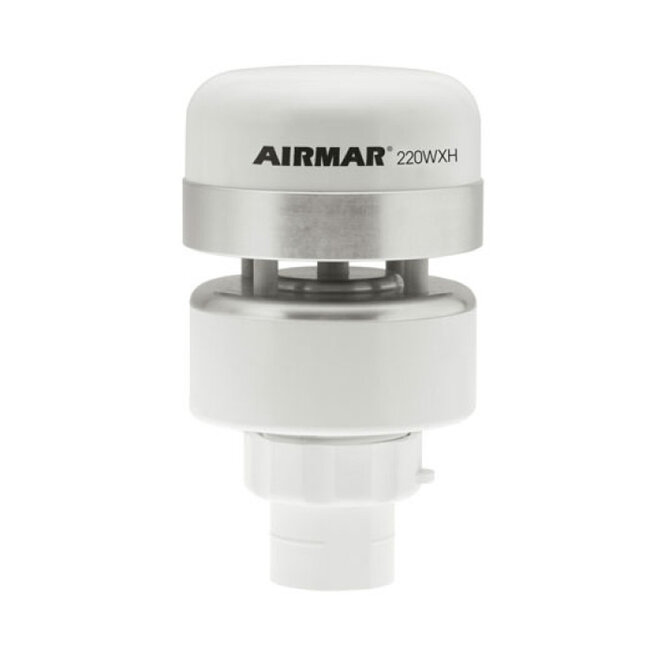

The 220WXH is a heated weather station with ultrasonic wind sensors, GPS, compass, barometer, and accelerometer. Data output via NMEA 0183, no NMEA 2000 support Read more.
The AIRMAR 220WXH WeatherStation Instrument is a high-performance, solid-state marine weather sensor engineered for professional operations in cold climates and icing conditions. As part of the WX Series, it features solid-state wind measurement, full environmental sensors, GPS, electronic compass, and a 3-axis accelerometer, combined with an integrated heating system that prevents ice accumulation and ensures continuous operation in freezing environments. With no moving parts and enhanced thermal management, the 220WXH delivers stable, motion-corrected wind and weather data in extreme conditions.
This model is designed for vessels and platforms operating in polar regions, winter patrol environments, offshore installations, and high-latitudes where frost, snow, and ice can compromise conventional sensors. Suitable for commercial workboats, research vessels, patrol craft, and fixed stations, the 220WXH provides accurate true and apparent wind data, even during rapid vessel motion, while maintaining full functionality in temperatures well below freezing.
Solid-state wind measurement: Captures apparent wind speed and direction without moving parts.
Integrated heating system: Prevents ice, frost, and snow accumulation for reliable cold-weather operation.
True wind calculation: Combines GPS, compass, and motion data for stabilized true wind output.
3-axis accelerometer: Provides pitch, roll, and motion compensation.
Integrated GPS: Supplies position, speed over ground, and course data.
Electronic compass: Delivers accurate heading information for wind correction.
Environmental sensors: Measures air temperature, humidity, and barometric pressure.
Cold-climate design: Engineered for sub-zero performance with continuous thermal regulation.
No moving parts: Maintenance-free system ideal for long-duration deployment.
WeatherStation Sensor Unit
A solid-state, heated sensor module combining wind, GPS, compass, accelerometer, temperature, humidity, and pressure sensors. Engineered for harsh winter environments, providing stable and accurate data even under icing or snow conditions.
Data Output Interface
Supports NMEA 0183 and NMEA 2000 for seamless integration with navigation displays, vessel monitoring systems, and onboard computers. Ensures synchronized transmission of true wind, apparent wind, and environmental data.
Power & Connection Harness
Marine-grade wiring assembly that supplies power to both the sensing components and the integrated heater system while ensuring reliable data transfer.
Wind measurement: Apparent & true wind speed and direction
Heating system: Integrated anti-icing and anti-frost heater
GPS: Position, speed over ground, course over ground
Compass: Solid-state electronic heading sensor
Accelerometer: 3-axis pitch and roll detection
Air temperature: Ambient temperature measurement
Humidity: Relative humidity measurement
Barometric pressure: Integrated solid-state pressure sensor
Sensor type: Fully solid-state, no moving parts
Data output: NMEA 0183 / NMEA 2000
Power input: 12–24 VDC, additional draw for heating system
Housing: UV-stabilized, cold-climate marine enclosure
Mounting: Suitable for mast or elevated fixed mounting points
Maintenance: No moving components for long-term reliability
220WXH sensor unit: Heated multi-sensor WeatherStation module
Mounting hardware: Standard marine mounting fittings
Power/data cable: Combined harness for power, heater supply, and data integration
Documentation: Installation guide and technical reference
The 220WXH must be mounted in a clear, unobstructed location to ensure accurate wind, motion, and environmental measurements. An elevated mast position is recommended to reduce airflow distortion and prevent snow or ice interference. The heater power wiring and data cables must be routed using watertight grommets and marine-grade connectors. Proper integration with the vessel’s NMEA network is essential to maintain synchronized GPS, compass, motion-compensated wind outputs, and heater functionality.